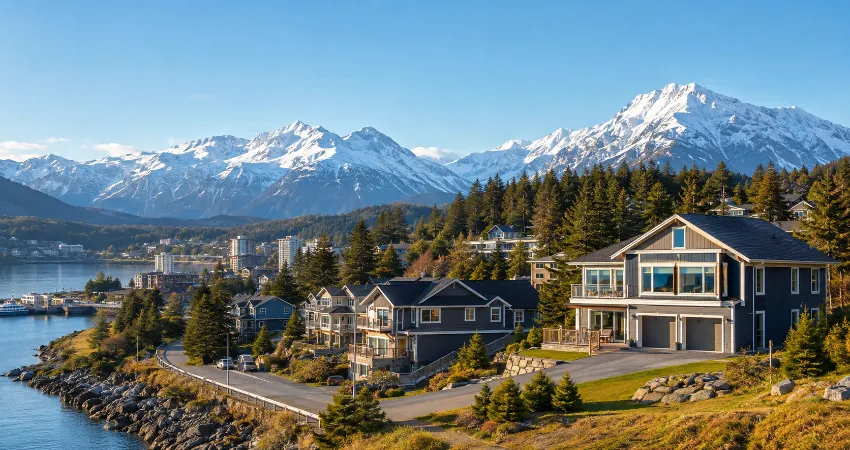
Alaska is not a conventional real estate market. Its large geographic area, concentrated population centers, construction costs, climate, transportation challenges, and reliance on several major industries can make property investment very different from investing in many Lower 48 markets. For that reason, choosing a property investment company in Alaska should involve more than simply looking for the largest business or the company with the most listings.
The strongest companies tend to have deep local knowledge, experience managing Alaska-specific operating costs, and a clear understanding of commercial, multifamily, industrial, retail, or mixed-use properties. Some companies on this list directly acquire and develop real estate, while others help investors manage, lease, improve, or evaluate income-producing properties.
The following selection is based on publicly available company information, Alaska market presence, operating history, portfolio diversity, development experience, and practical usefulness to property owners. Investors should still conduct independent financial and legal due diligence before entering any transaction.
1. JL Properties
JL Properties is one of the most substantial real estate investment and development businesses headquartered in Alaska. Established in 1990, the Anchorage-based company reports a portfolio with a market value exceeding $2 billion. Its Alaska activities include Class A office buildings, retail properties, apartments, and privatized military housing. The company owns or manages more than two million square feet of Class A Anchorage office space and has extensive multifamily holdings. For investors studying large-scale Alaska real estate, JL is particularly relevant because it combines acquisition, development, ownership, and ongoing property management rather than focusing on only one stage of the property cycle.
2. CIRI Real Estate
Cook Inlet Region, Inc., commonly known as CIRI, operates a diversified real estate strategy involving commercial, residential, retail, office, light-industrial, and other income-producing assets. Its Alaska portfolio includes major developments such as Tikahtnu Commons and the Fireweed Business Center. CIRI also participates in partnerships and investments outside Alaska. Its approach provides an important lesson for individual investors: Alaska property ownership does not necessarily require concentrating everything in one asset category. Diversification across property types and markets can help create a more resilient long-term portfolio.
3. Hickel Investment Company
Hickel Investment Company is an established Alaska real estate holding company associated with properties across Anchorage and surrounding areas. The Hickel family’s involvement in Alaska development extends for more than six decades. Its portfolio includes hospitality, retail, office, storage, and mixed-use properties, including recognizable assets such as Hotel Captain Cook. The company’s longevity is particularly relevant in Alaska, where understanding land use, operating costs, local business cycles, and long-term property maintenance can be as important as identifying an attractive acquisition price.
You May Like: Top 10 Best Property Investments Companies In Delaware
4. Pacific Acquisitions
Pacific Acquisitions is headquartered in Anchorage and has operated in commercial real estate investment and development since 1974. The company focuses heavily on distribution, warehouse, and research and development properties and reports acquiring or developing more than 150 properties nationally. Although much of its current portfolio extends beyond Alaska, it has historical Alaska holdings and decades of experience originating from the state. It is particularly useful to study for investors interested in industrial and commercial properties rather than conventional residential rentals.
5. Debenham LLC
Debenham LLC is an Anchorage-based real estate development and property management business with a strong multifamily focus. The company’s roots in Alaska real estate extend back several decades, while the current LLC structure dates from 2021. Its developments include projects such as Block 96 and other Anchorage multifamily communities. Debenham stands out because new housing development in Alaska involves challenges that investors in warmer markets may rarely encounter, including seasonal construction limitations, material transportation costs, energy efficiency requirements, and constrained housing supply.
6. Zelener Group
Zelener Group was established in 2000 and invests in, develops, owns, and manages real estate. Its Alaska properties have included assets in Anchorage, Dutch Harbor, and Nome, giving the company exposure beyond the state’s largest city. This geographical experience is noteworthy because Alaska should not be treated as one uniform property market. Anchorage, Nome, Dutch Harbor, Fairbanks, Juneau, and Mat-Su communities can have very different tenant demand, employment drivers, logistics, and operating expenses.
7. Calais Company, Inc.
Calais Company is a privately owned commercial real estate development corporation with a history dating to 1959. The business grew from an Anchorage land acquisition that became part of today’s Midtown commercial area. Its history illustrates a distinctly long-term property strategy: acquiring well-positioned land and participating in the gradual development of the surrounding commercial district. Investors evaluating Alaska land should recognize that location, infrastructure availability, zoning, access, utilities, and future development potential can matter considerably more than the raw size of a parcel.
8. Mota Properties
Mota Properties is a family-owned Alaska real estate investment company specializing in property development and affordable multifamily housing in Anchorage. Its portfolio includes apartments, townhomes, condos, and houses. Compared with Alaska’s large institutional property owners, Mota represents a more residentially focused investment model. This makes the company relevant to smaller investors researching how locally managed rental portfolios operate, particularly in segments where stable housing demand and careful property maintenance can be central to long-term performance.
9. Commercial Real Estate Alaska
Commercial Real Estate Alaska provides commercial property management, sales, leasing, and development-related services. The company has decades of experience in Alaska commercial real estate and has participated in build-to-suit projects around Anchorage, Eagle River, and Wasilla. It is better viewed as an investor service platform than a traditional investment fund. Property owners considering retail, medical, office, or other commercial assets may find this type of local expertise particularly valuable when analyzing tenants, lease structures, property expenses, and redevelopment opportunities.
10. AIMS Property Management
Alaska Investment Management Solutions, or AIMS Property Management, approaches management from an investor-oriented perspective. Based in Anchorage, it focuses on residential and multifamily assets and emphasizes operating expenses, cash flow, tenant acquisition, financial reporting, maintenance, and long-term property value. For individual rental-property owners, these operational details can have more influence on actual performance than market appreciation alone. A property with strong demand can still produce disappointing results when maintenance, vacancy, turnover, and operating costs are poorly controlled.
What Makes Alaska Property Investment Different?
One practical mistake is evaluating an Alaska property with assumptions borrowed directly from another state. Heating expenses, winter maintenance, insurance, construction labor, shipping costs, accessibility, and local population trends deserve close attention. Investors should also identify the economic driver supporting a property’s tenants. Government employment, military activity, tourism, transportation, energy, healthcare, fishing, and regional commerce can influence different Alaska communities in different ways.
How to Choose an Alaska Property Investment Company?
Start by matching the company to your intended asset class. A firm experienced in downtown commercial towers may not be the ideal resource for a small duplex, while a residential manager may offer limited value for industrial acquisitions. Review actual Alaska projects, years of local operation, management capabilities, property specialization, fee structures, communication procedures, and financial reporting. Investors should also independently examine projected income, vacancy assumptions, operating expenses, capital improvements, financing costs, title matters, and local regulations rather than relying entirely on a company’s presentation.
FAQs About Property Investment Companies in Alaska
1. Is Alaska a good state for real estate investment?
Alaska can provide worthwhile opportunities, but results vary substantially by community and property type. Investors need to examine local employment, population stability, housing supply, construction costs, rent levels, vacancy, and ongoing expenses. A property should be evaluated primarily on its own financial fundamentals rather than on a general assumption about the entire state.
You May Like: Top 10 Best Property Investments Companies In Rhode Island
2. Which Alaska company has one of the largest real estate portfolios?
JL Properties is among the most prominent Alaska-based real estate companies by publicly reported portfolio scale. The company states that its portfolio exceeds $2 billion in market value and includes major office, residential, retail, and other developments. Portfolio size alone, however, should not determine which company is appropriate for an individual investor.
3. Are all companies on this list direct real estate investment companies?
No. Several directly own, acquire, or develop properties, while others primarily provide management, leasing, brokerage, or investor-oriented services. The distinction matters because an investor seeking to participate in a development has different requirements from a landlord looking for professional management of an existing property.
4. What type of Alaska property should a beginner consider?
There is no universally appropriate property type for beginners. Smaller residential properties may be easier to understand, while commercial assets usually involve more complicated leases, financing, tenant improvements, and vacancy considerations. The best starting point is an asset whose income, expenses, maintenance requirements, and financing the investor can realistically evaluate.
5. Why is local property management especially important in Alaska?
Alaska properties can face demanding weather, heating, snow removal, maintenance, and accessibility conditions. A responsive local manager can coordinate repairs, communicate with tenants, oversee contractors, monitor expenses, and address seasonal issues before they become larger problems. These responsibilities can be difficult for owners managing remotely.
6. Is Anchorage the main market for Alaska property investors?
Anchorage is the state’s largest population and business center and consequently receives substantial investor attention. However, opportunities also exist in Fairbanks, Wasilla, Palmer, Juneau, Kenai Peninsula communities, and specialized regional markets. Each location should be analyzed independently because local economic drivers and housing conditions differ considerably.
7. What should investors check before selecting a company?
Review the company’s actual services, Alaska experience, management history, property types, project examples, fees, reporting practices, and professional credentials where applicable. Investors should also request clear explanations about who owns an asset, who manages it, how expenses are handled, and what responsibilities remain with the property owner.
8. Are multifamily properties popular with Alaska investment companies?
Multifamily housing is an important part of the Alaska real estate market, and several companies on this list have significant experience in the sector. Its appeal comes partly from continuous housing demand and the ability to spread vacancy across multiple units. Nevertheless, maintenance, utilities, financing, management quality, and acquisition price remain critical.
9. Should investors consider commercial property in Alaska?
Commercial property can be appropriate for experienced investors who understand tenant quality, lease duration, location, operating expenses, and local business demand. Office, retail, industrial, hospitality, and mixed-use properties behave differently, so investors should avoid treating commercial real estate as a single category.
10. How can an investor reduce mistakes when entering the Alaska market?
Use conservative financial assumptions, inspect the property carefully, obtain professional advice when needed, study comparable rents and vacancies, and budget realistically for maintenance and capital improvements. Most importantly, evaluate the specific neighborhood and tenant market instead of relying solely on statewide statistics or projected appreciation.
Conclusion
The best property investment company in Alaska ultimately depends on what an investor wants to accomplish. JL Properties and CIRI demonstrate large-scale diversified investment, while Hickel, Pacific Acquisitions, Debenham, Zelener, and Calais provide different examples of long-term development and ownership strategies.
Mota Properties, Commercial Real Estate Alaska, and AIMS are particularly relevant when researching residential operations or investor-focused property services. Before choosing any company or property, compare its specialization with your objectives and verify the financial, operational, and legal details of the specific opportunity.